Bouquets to Art 2025
My favorite flower show ended up being one of the busiest weeks of the year, squeezed between my work schedule and my son’s graduation. Because of that, I could only visit on the very last day of the week-long event. That’s not ideal—the flowers aren’t as fresh, and I missed out on the live demonstrations—but there was a silver lining: three flower lovers attending the show for the first time, were able to join me. Sharing the experience with them made the day especially fun.
Here are the exhibits I loved most this year:
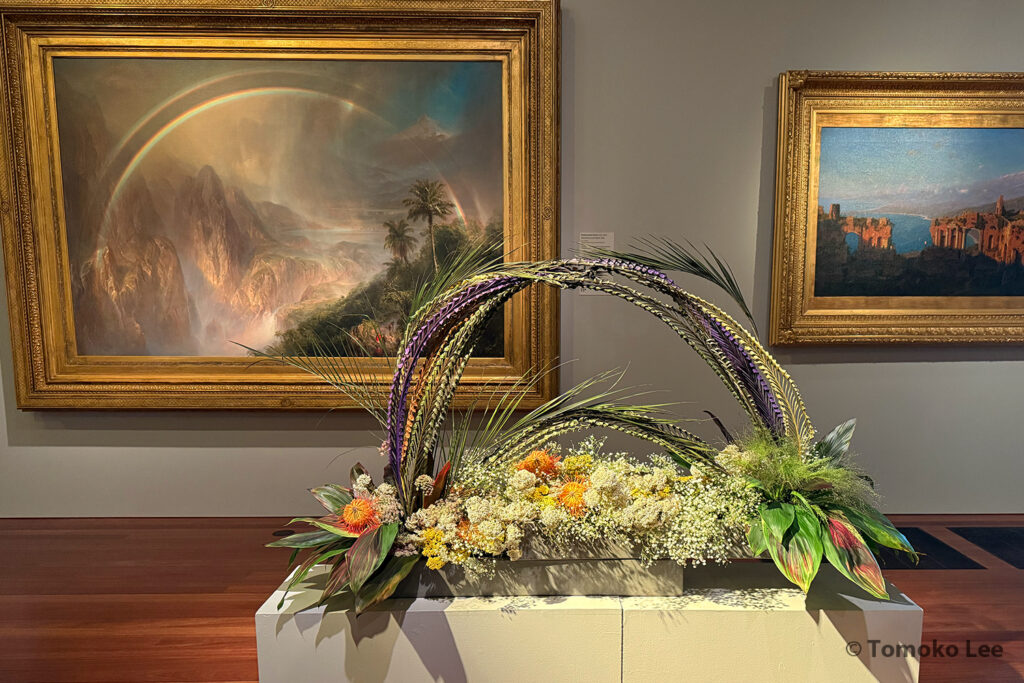
Exhibitors: Katsuko Thielke; Junko Kato (assistant)
Complementary Art: Rainy Season in the Tropics (1866) by Frederic Edwin Church
This is my teacher’s work. I actually saw her creating this arrangement at her home, where she explained how she interpreted the painting and how she developed the rainbow-shaped design.
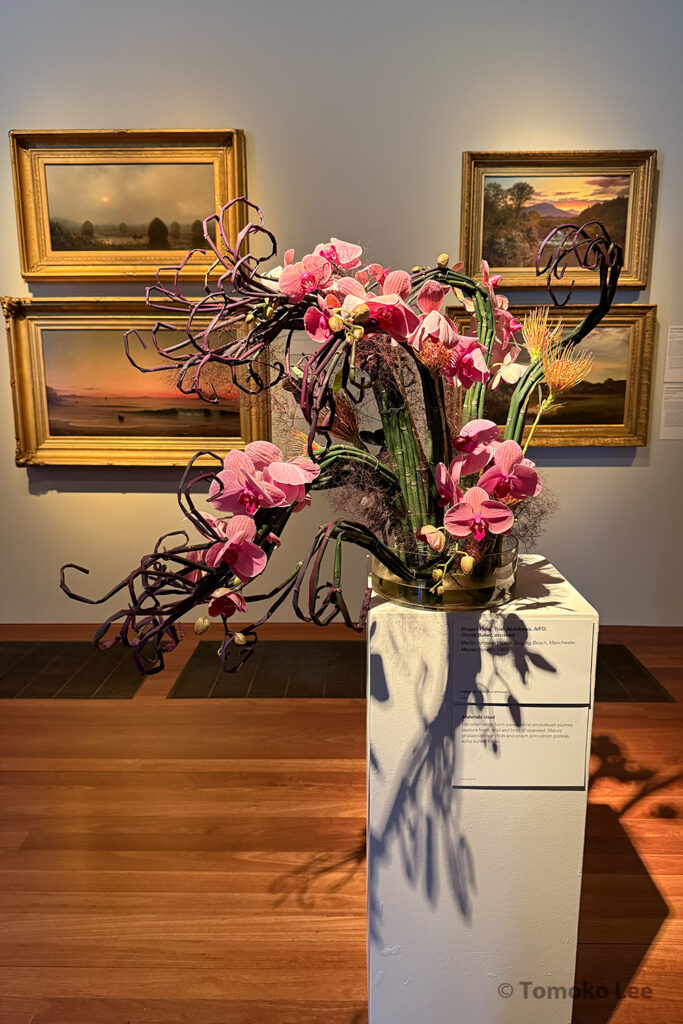
Exhibitors: Project Fleur – Trish Nishikawa; Christi Baker (assistant)
Complementary Art: Singing Beach, Manchester, Massachusetts (1863) by Martin Johnson Heade
Materials Used: Horsetail, Smoke Tree, Phalaenopsis Orchid, Pincushion Protea
The curved, wine-colored horsetail—likely wired and dyed—was visually striking. I was also impressed by the technique used to balance such top-heavy materials so gracefully.
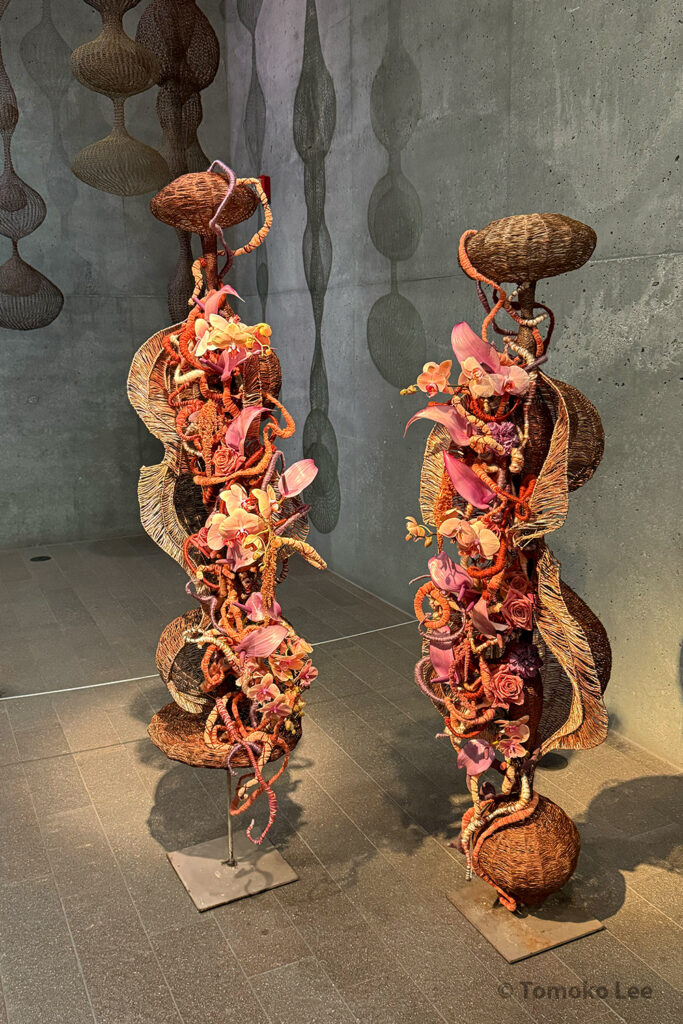
Exhibitor: Cheryl McGuire
Complementary Art: Untitled by Ruth Asawa
This piece must have taken weeks to build. The knit- or thread-like structure, paired with calla lilies, roses, and orchids in complementary colors, blended beautifully. It also echoed the delicate wire sculpture by Ruth Asawa. I also liked her exhibit for 2024.
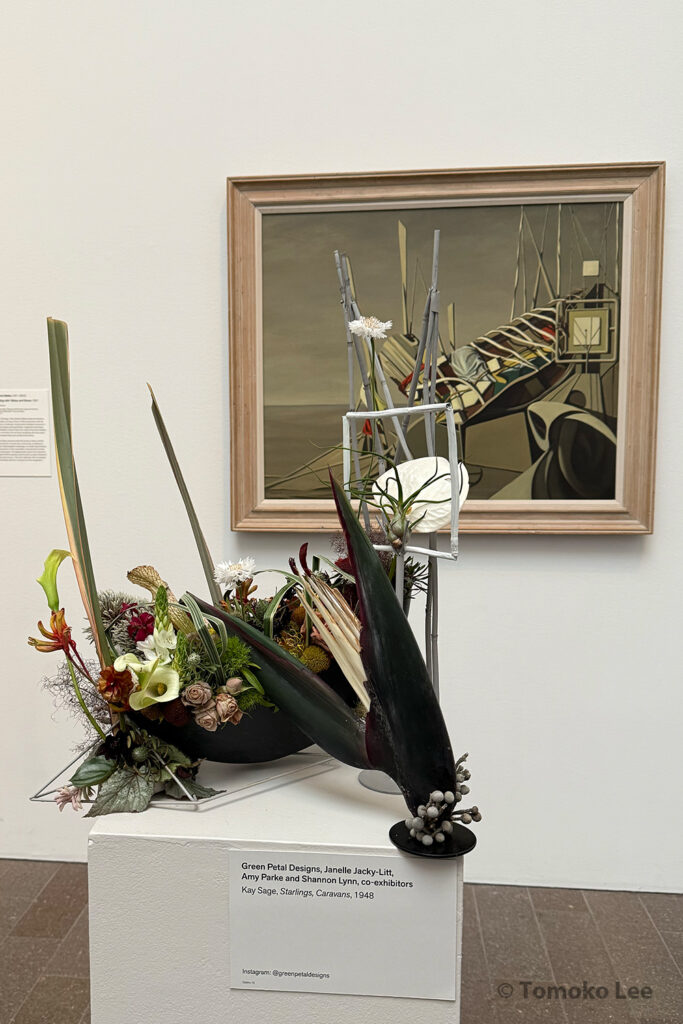
Exhibitors: Green Petal Designs – Janelle Jacky-Litt, Amy Parke, and Shannon Lynn
Complementary Art: Starlings, Caravans (1948) by Kay Sage
This arrangement faithfully recreated the surreal shapes of the artwork. What amazed me was how the designers managed to combine nearly 20 different floral materials without the result feeling cluttered or chaotic.
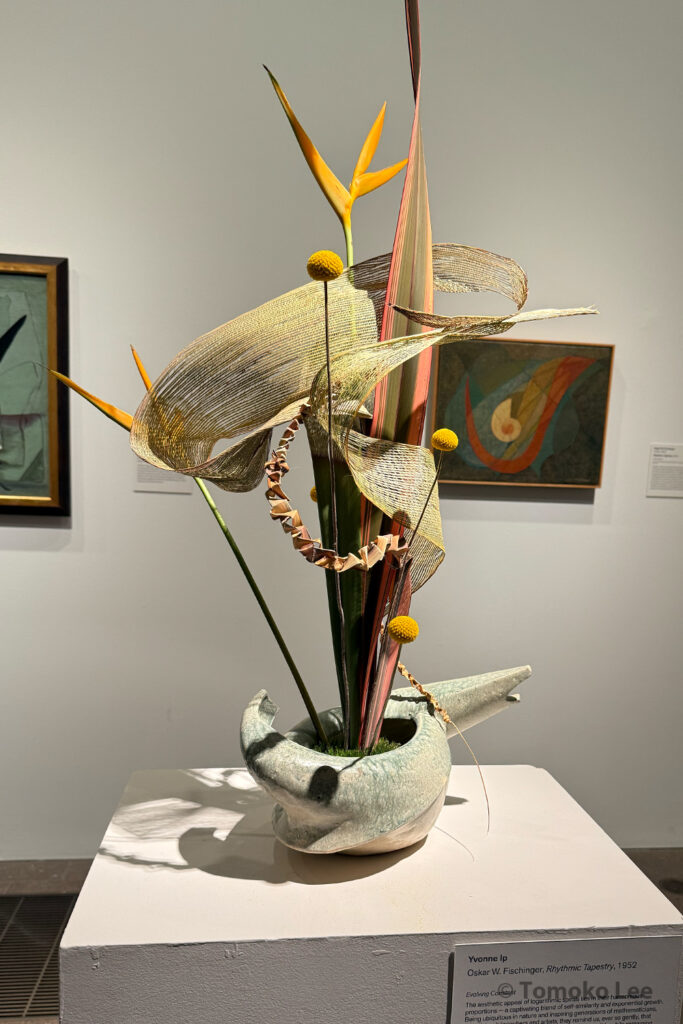
Exhibitor: Yvonne Ip
Complementary Art: Rhythmic Tapestry (1952) by Oskar W. Fischinger
Yvonne has learned weaving techniques from Katsuko Sensei, but she has developed her own distinct voice as a designer. Her choice of materials created a simple, elegant harmony with the artwork behind it.
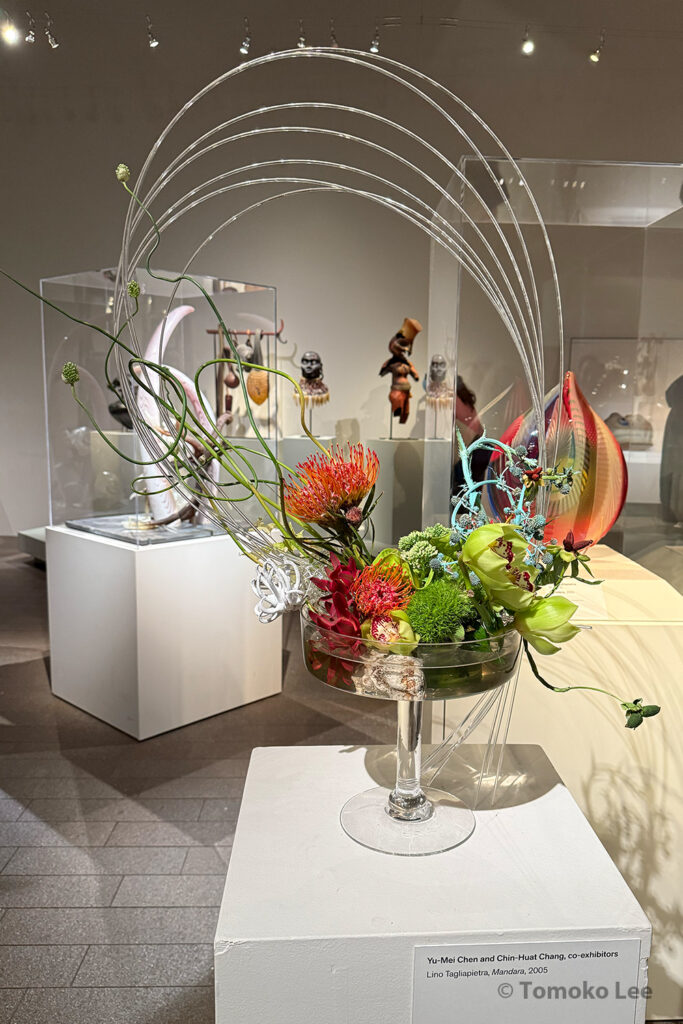
Exhibitors: Yu-Mei Chen and Chin-Huat Chang
Complementary Art: Mandara (2005) by Lino Tagliapietra
I always admire Yu-Mei Chen’s clean, understated style. Her sensitivity to line and texture makes every arrangement uniquely her own.